Hypertension – persistent high – is one of the to stroke, , and cardiac arrest. It claims the lives of more than worldwide each year. However, it is a condition that can be managed with relatively inexpensive that are largely treatable, along with simple lifestyle changes.
This is precisely why early diagnosis is extremely valuable.

In Nigeria, has been rising for years. According to the World Health Organization, the prevalence of hypertension among Nigerian adults is approximately .
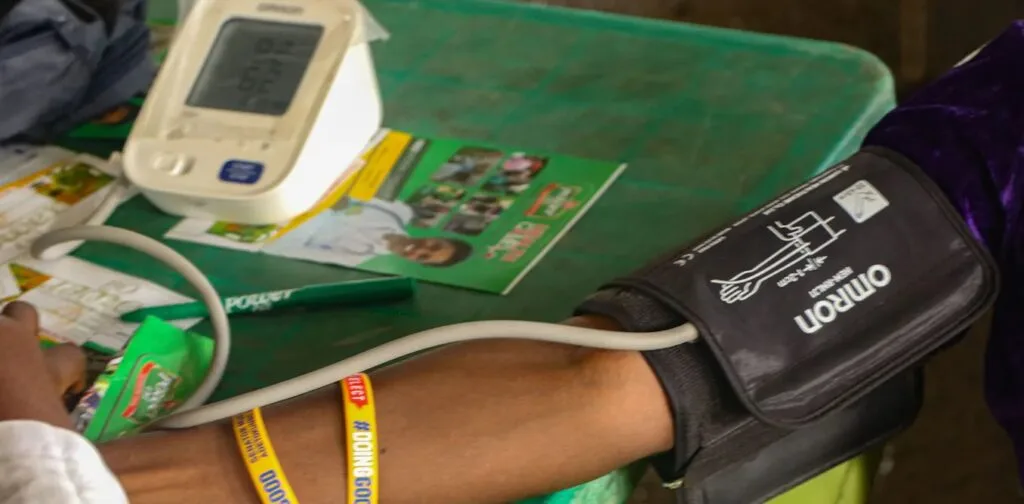
The scale of the challenge became clearer in 2023, when the cardiologists on our team spent three months in Lagos setting up blood pressure measurement stations. We established these stations in hospitals, pharmacies, workplaces, and public spaces throughout the city, testing up to 1,500 adults as they passed by. The results were concerning.
Our findings show that 52.5% of those tested had high blood pressure, and 65.3% of those with high blood pressure were unaware that their blood pressure was elevated. The gap in care was even deeper. Only 13.8% of the individuals we identified as having high blood pressure are taking medication for their condition, and only 8.3% have their blood pressure under control. High blood pressure is defined as a blood pressure of 140/90 mmHg or higher.
In a city home to more than 20 million people, this meant that millions of people were wandering around unaware that they were living with a serious medical condition, or were not receiving the care they needed.
If Nigeria meets the modest 50% hypertension control target requested by the WHO and the World Hypertension League, at least 75 million deaths worldwide could be prevented by 2050.
However, our findings show that the first obstacle is increasing people’s awareness of their own condition. Screening plays a central role here. If we cannot detect the condition, we cannot treat it either—especially in the early stages, when habits can still make a real difference.
Our findings underscore the need for stronger health systems that promote sustainable mass screening, improve access to affordable antihypertensive treatment, and ensure that patients are not lost along the pathways of diagnosis, treatment, and successful blood pressure control.
From Awareness to Action
Worldwide, keep their blood pressure under control. sheds light on some of the reasons why.
When we spoke with participants in Lagos, 57.3% reported that they paid for the full cost of their medication themselves, while more than one in five said they only took their tablets when they felt the need to.
When a drug becomes a financial matter and competes with tuition fees or transportation costs, it is not surprising that adherence rates decline.
It is also true that this is, to some extent, a matter of understandability and awareness. While 64.6% of those undergoing treatment say they take their medication regularly, 22.4% take their tablets only when they feel the need, despite going against clinical recommendations.
Compatibility and prevalence partially reflect educational level. Individuals with no formal education had approximately two and a half times the likelihood of falling into a higher blood pressure category compared to those without formal education.
Solutions
Most of what is needed already exists and nothing is expensive. The drugs and protocols are already available; they are outlined in the World Health Organization’s . What needs to change is where care is delivered.
Nurses and primary healthcare workers can measure blood pressure, initiate treatment within the protocol framework, renew prescriptions, and identify the red flags indicating that a patient needs to be referred; tertiary centers handle complications. Adding hypertension to an already existing system is much cheaper than building a new system from scratch.
Awareness and prevention are the keys to improving Nigeria’s heart health. When a patient reaches me at the hospital, it means the system has already failed for that person. For the cost of treating a heart attack, we can manage the risk factors of many people well before they ever seek help from a cardiologist.
Next steps
Nigeria was at the center of the events. The World Heart Federation, in collaboration with the Nigerian Cardiomyopathy Association, organized a two-day conference in Abuja, which included a middle school-level discussion and art competition, a community walk, health screenings, and BLS (Basic Life Support) training.
The Nigerian Heart Foundation, CHDf Nigeria, and the Nigerian Cardiac Society’s regional branches are also organizing grassroots events focused on raising awareness and providing community health services throughout the rest of the country.
However, the World Heart Federation’s members around the world can only do a limited thing. Addressing this global issue requires systemic action.
In Lagos and much of sub-Saharan Africa, there is a two-fold lack of access to screening and access to treatment when hypertension is detected. This is where systemic change is needed. Nigeria needs integrated health systems that reduce out-of-pocket payments, bring routine check-ups into primary care, and enable community health workers to screen, refer, and follow up on their patients.
There are proven, patent-expired drugs that effectively control blood pressure. These should be made available at a reasonable cost.
Bu gelişme hakkında düşüncelerinizi, donanım deneyimlerinizi veya sorularınızı Community Forumumuzda paylaşın.
Foruma Katıl & Yanıtla ➔





















读者社区
0 条评价
您可以分享您的经历;有关诊断、治疗或紧急情况,请咨询专业医护人员,而非参考评论。